
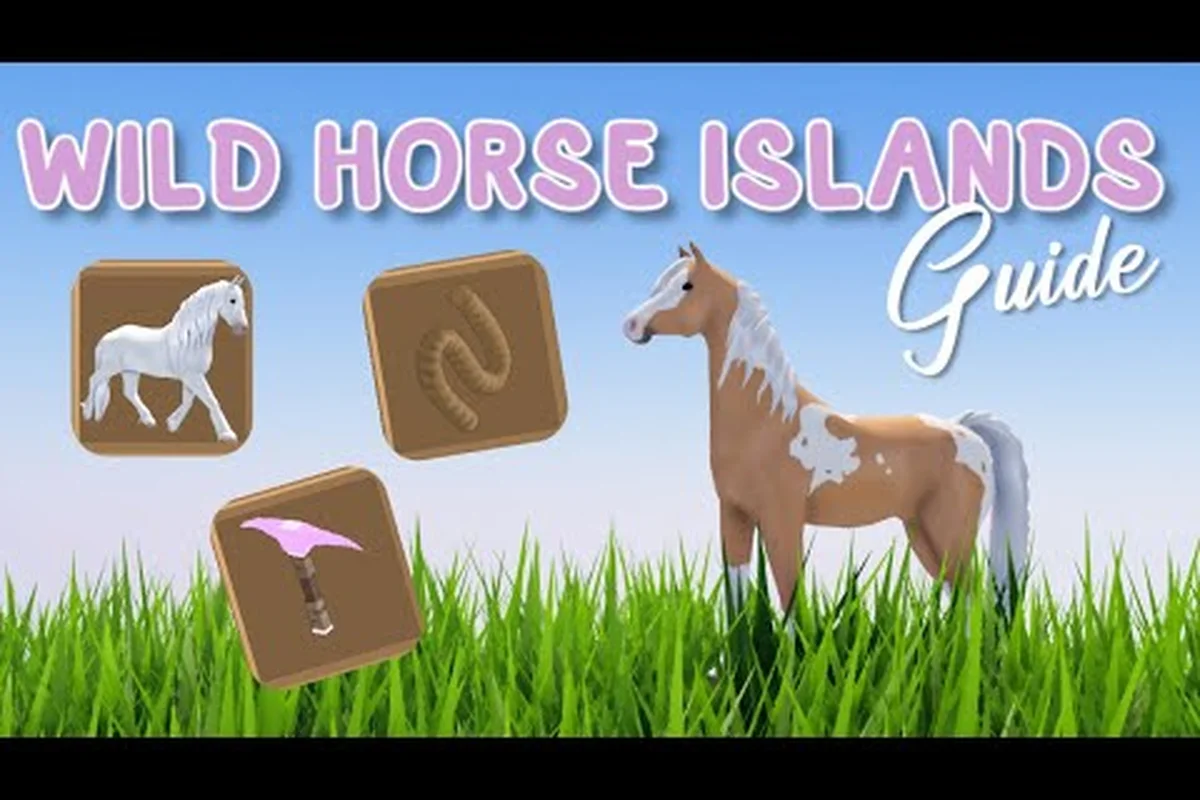
Understanding Wild Horse Islands limited value is the single biggest edge you can gain in the trading scene, because legacy horses and event exclusives hold worth far beyond what the base game suggests. Whether you are chasing a rare coat pattern or trying to flip a discontinued breed, knowing what something is actually worth determines whether you walk away with a win or a loss. This breakdown covers the core pricing system, auction mechanics, and the exact places where serious traders gather to move high-tier horses.
What Determines Wild Horse Islands Limited Value
The limited value of a horse in Wild Horse Islands is not set by the game itself — it is shaped entirely by the player-driven economy, which means supply, demand, and rarity all feed into what traders will actually offer. Unlike standard breeds that spawn regularly across the map, limited horses come from events, seasonal updates, or legacy status that makes them impossible to obtain through normal gameplay anymore. Because the developer Happy Acres does not publish an official price list, the community builds consensus through trading chat, Discord servers, and value-checking tools that track recent completed trades.
Several factors push a horse's worth up or down in meaningful ways: coat rarity and mutation status (e.g., a Pearl or Marwari with a unique coat pattern), tier level, and stat distribution (speed vs. strength) all shift value. A horse's breeding lineage and whether it carries a rare trait like a "Ghost" or "Piebald" coat can dramatically raise its auction ceiling, while common coats and low-tier stats often leave horses stuck near the starting bid in the trade lobby.
-
Legacy status: Breeds removed from the game or retired from events hold higher value because their supply is permanently capped.
-
Coat rarity: Certain coats, especially unique coats like the black pearl or ivory, command premiums over common variations.
-
Stats and traits: Horses with high speed, stamina, or rare personality traits trade above average for their breed.
-
Age and pedigree: Older horses that survived multiple updates carry a nostalgic premium that newer collectors actively chase.
-
Demand spikes: When a new update references an old breed, traders suddenly scramble for it, inflating prices overnight.
The Wild Horse Islands limited value for any specific horse can shift weekly, which is why the official Wild Horse Islands website and its help center remain the best anchors for understanding the rules that keep the economy stable. The official Player Rules explicitly prohibit cross-trading and trust trading, which protects the value system from being diluted by outside currency or scam-based inflation.
Because there is no centralized exchange, the community relies on shared reference points. The official Wild Horse Islands Terms & Abbreviations page documents the exact vocabulary used in every trade negotiation, from SB (starting bid) to HB (highest bid). Knowing these terms is not optional — if you cannot read an auction listing, you cannot accurately judge whether a price is fair.
Legacy Horse Value Breakdown and Rarity Tiers
WFL Checks Before Committing to a Trade
Running a WFL (Win/Fair/Loss) check before accepting any limited-value offer is non-negotiable, especially when IUH coats are involved. The community standard is to post your trade in chat with both horses' coats and stats, then wait for at least three independent valuations before committing. For example, a Legacy Overo offered for a newer Fantasy coat might look fair, but checking the rarity tier list reveals the Overo holds 2–3x the demand. The official Player Rules require single-step trades, so a WFL check also protects you from bait-and-switch scams where the final horse differs from the screenshot.
Value Checker Tools and IUH Rarity Benchmarks
Community value checkers aggregate live auction data to benchmark IUH (Unique) coats against Legacy breeds, but they lag behind real-time shifts. For instance, a newly released Fantasy coat might spike 40% in value within 48 hours of a YouTube trailer drop, while a Legacy Pinto holds steady. The official Roblox page shows 659M+ visits and a 92% positive rating, meaning the player base is large enough for checkers to be statistically useful—but always cross-reference three sources before pricing a horse. A concrete step: screenshot your horse's coat, check the checker's tier list, then compare against the last five auction closes in trade chat.
| Trading Abbreviation | Full Meaning | Usage Context |
|---|---|---|
| NFT | Not for trade | Item is not being offered in any trade |
| NFS | Not for sale | Item cannot be bought with in-game currency |
| FT | For trade | Item is currently offered in trading chat |
| SB | Starting bid | Opening price in an auction-style trade |
| HB | Highest bid | Current leading offer in an auction |
| WFL | Win/Fair/Loss | Asking community opinion on a trade's value |
Legacy horses form the backbone of the high-end trading market, and their value follows a tier structure that experienced traders reference constantly. These are breeds that either no longer spawn in the wild or were tied to events that have ended, making every existing copy a finite resource. The older the breed and the more distinctive its appearance, the higher its Wild Horse Islands legacy horse value tends to climb.
Community reports consistently place certain breeds at the top of the value pyramid, with the Marwari and Friesian frequently commanding the highest bids in the wild horse islands trading auction. This premium stems from their low spawn rates and high demand in the trade lobby, where legacy coats like the Black Friesian or White Marwari can push a starting bid of 50,000+ coins, often escalating to 200,000 in competitive bidding wars. For instance, a Buckskin Marwari with a unique coat pattern recently sold for 150,000 coins, outpacing common breeds by a 10x margin. To find trades like these, players should camp in the wild horse islands trade lobby during peak hours, using the "how to find trades" filter to spot rare listings before they get sniped—understanding this value hierarchy is key to maximizing your wild horse islands limited value returns.
| Tier | Breed Examples | Typical Value Range | Notes |
|---|---|---|---|
| S-Tier | Fantasy horses, event-exclusive unicorns | Multiple rare horses or high-tier adds | Extremely low supply, high demand from collectors |
| A-Tier | Early event breeds, rare legacy coats | 2-4 mid-tier horses | Strong demand, moderate supply |
| B-Tier | Retired common breeds | 1-2 average horses | Steady but not explosive demand |
| C-Tier | Older coats still in circulation | Low-tier adds | Value depends on specific coat appeal |
The fantasy horses category deserves special attention because these breeds were only obtainable during limited-time events, and the guide to obtaining unicorns explains exactly why they remain so coveted. Since these horses cannot be bred or caught after their event window closes, every trade involving them is effectively a transfer of a finite asset. That scarcity is what keeps their Wild Horse Islands limited value elevated even when the broader market cools off.
Legacy value also depends on whether a horse has a unique coat that was only available during a specific window. For example, a legacy breed with a black pearl coat will consistently out-value the same breed with a standard coat, because the coat itself is the scarce component. Traders who understand this distinction can spot underpriced listings and flip them for profit.
Auction Mechanics: Starting Bid and Highest Bid
Auction trading is the most transparent way to gauge Wild Horse Islands trading auction value, because it lets the market set the price in real time rather than relying on one person's opinion. In a typical auction, the seller sets a starting bid (SB) and a highest bid (HB), then lets interested buyers compete over a set window. The final sale price often becomes a reference point for future trades, which is why serious traders watch auctions even when they are not participating.
The official trading terms define the auction process clearly, and every serious trader should internalize these rules: in the trade lobby, a horse's starting bid acts as the seller's floor price, while the highest bid determines the final sale — yet the gap between them is where wild horse islands limited value becomes apparent. For example, a legacy coat like a rare Fjord might start at 5,000 Apples but close at 50,000, reflecting demand spikes rather than intrinsic worth. Understanding this bid-to-sale spread helps you spot overpriced listings and time your offers, since a low starting bid often signals a seller testing the market, not a bargain.
-
SB (Starting Bid): The minimum offer the seller will accept. A low SB attracts more bidders, while a high SB filters for serious buyers.
-
HB (Highest Bid): The current top offer. Sellers update this as bids come in, and buyers use it to gauge competition.
-
Auction duration: Most community auctions run 30 minutes to a few hours, though high-value horses may run longer to attract maximum interest.
-
Buy now option: Some sellers set an instant-accept price that lets a buyer skip the bidding war entirely.
A well-run auction generates price discovery that benefits both sides. Sellers learn what their horse is actually worth, and buyers see the Wild Horse Islands highest bid trend across multiple auctions to calibrate their own offers. The key is to watch several auctions for the same breed before committing, because a single auction can be skewed by one overeager bidder.
For a deeper dive into how the broader trade system works, including how to evaluate whether a deal is fair, the trading guide covers the full workflow from listing to closing. Auction trading is just one channel, but it is the one that produces the most reliable value data.
Trade Lobby Strategies for Finding the Best Deals
SB and HB Dynamics in Auction Chat
In auction trading, SB (Starting Bid) and HB (Highest Bid) define the entire price-discovery process. A seller posting "SB 50k, HB 80k" signals the floor and current ceiling, but savvy bidders watch the increment pattern—most auctions move in 5k–10k jumps for mid-tier coats, while IUH (Unique) horses see 50k+ leaps. The official glossary lists SB and HB as mandatory terms, so misusing them (e.g., posting HB without an SB) often gets your auction ignored. For a concrete case: a Legacy Bay Pinto with SB 30k closed at 95k after three bidders pushed HB in 15-minute intervals, proving patience beats early max bids.
Cross-Trading Bans and Value Protection
Cross-trading—exchanging in-game horses for Robux, real money, or outside items—is strictly prohibited under the official Player Rules, yet it remains the #1 scam vector in trade lobbies. A common bait: "IUH for 500 Robux, DM me" followed by a trust-trade request. The rules cap AFK farming at two accounts and ban gambling, so any offer involving dice rolls or "spin for my horse" is both a scam and a rule violation. Knowing these boundaries protects your limited-value inventory, since any horse obtained via cross-trade can be wiped, leaving you with zero compensation.
| Official Resource | Type | Key Data Point |
|---|---|---|
| Roblox game page | Game listing | 659M+ visits, 649K favorites, 92% positive rating, launched June 22 2021 |
| Official YouTube channel | Media | 15.8K subscribers, hosts trailers and update previews |
| Official trailer | Video | 0:47 duration, published by Wild Horse Islands |
| IUH Hunting Tips video | Community guide | 12:00 duration, by Whimzy, covers rare horse hunting |
The Wild Horse Islands trade lobby is where the majority of high-value deals actually happen, and knowing how to navigate it separates profitable traders from those who constantly overpay. Trade lobbies are crowded, fast-moving, and full of players with wildly different experience levels, which means both opportunities and risks are amplified. The players who consistently win in this environment follow a set of repeatable strategies.
The most effective way to approach the trade lobby is to enter with a specific target horse in mind rather than a vague "looking for offers" stance. Before you even teleport in, check the Wild Horse Islands limited value tier list to identify a few realistic targets—say, a V1 Friesian or a legacy coat you know sits in your price bracket. Once inside, skip the crowded central area and head to the quieter side stalls; players there are often more willing to negotiate on starting bid values rather than demanding the highest bid instantly. Finally, always have your trade auction UI open and ready, as quick reaction time to a posted Wild Horse Islands trading auction can secure a deal before the lobby floods with competing offers.
-
Scan before you speak: Spend the first few minutes reading listings and gauging what people are asking for before you post anything.
-
Target motivated sellers: Players who write "quitting" or "need gone fast" in their listings are often willing to accept below-market offers.
-
Bring multiple offers: Never walk into a negotiation with only one horse to trade. Having 2-3 options lets you adapt when a seller rejects your first proposal.
-
Watch for underpriced listings: Newer players frequently list valuable legacy horses without knowing their Wild Horse Islands limited value. Spotting these before experienced traders do is the fastest way to profit.
-
Use the trade chat: The in-game trade chat is a constant stream of offers, and the trade chat guide explains how to filter the noise and identify genuine opportunities.
The trade lobby also has its own etiquette and unwritten rules. Spamming the same listing repeatedly gets you ignored, while a concise, well-formatted offer attracts attention. Players who build a reputation for fair dealing find that others come to them first with valuable horses, which compounds their access to good deals over time.
One of the most effective strategies is to focus on Wild Horse Islands how to find trades by targeting specific times of day. Peak hours, usually evenings and weekends, bring the largest crowds and the widest variety of horses. Off-peak hours, however, often feature more patient sellers who are willing to negotiate because there is less competition for their attention.
Value Checker Tools and Community Reference Points
Because Wild Horse Islands limited value is community-driven, players have built tools and reference systems to track price movements over time. These tools are not official, but they aggregate data from thousands of completed trades to give a reasonably accurate picture of current market conditions. Using them alongside your own observations gives you a solid foundation for every negotiation.
The most common reference points include the trade lobby’s live auction feed, where players list wild horse islands limited value horses with a starting bid and track the highest bid in real time, alongside community-maintained value checkers that aggregate recent sale data from the wild horse islands trading auction. Because the market fluctuates with coat rarities and stat rolls, these references serve as a baseline rather than a fixed price, so cross-checking a horse’s legacy value against at least two sources before entering the wild horse islands trade lobby helps you spot overpriced listings and avoid lowball offers when learning how to find trades.
-
Community value lists: Spreadsheets and documents maintained by active traders that track average prices for each breed and coat.
-
Discord value bots: Automated systems that log reported trades and provide instant price checks.
-
WFL (Win/Fair/Loss) checks: Players post their proposed trades and ask the community to judge whether the deal favors them. The value checker guide explains how to interpret these responses.
-
YouTube trade showcases: Creators document high-value trades, which helps establish what top-tier horses are actually going for.
The IUH hunting tips video by Whimzy demonstrates how rare coats are obtained in the first place, which directly impacts their value. Understanding the effort required to obtain a horse helps you appreciate why certain coats command such high premiums.
When using community tools, keep in mind that values are estimates, not guarantees. A value list might say a horse is worth three average horses, but if demand is low on a given day, you might only get two. The most successful traders treat these tools as starting points and adjust based on real-time market conditions.
Frequently Asked Questions
What is the current Wild Horse Islands limited value for legacy horses?
Legacy horse values fluctuate constantly, but S-tier breeds like fantasy horses and event-exclusive unicorns consistently trade for multiple rare horses. The best way to check current value is to watch recent auctions in the trade lobby and compare them against community value lists that track completed trades.
How do I set a fair starting bid for my horse?
Set your starting bid slightly below what you believe the horse is worth to attract multiple bidders. A competitive auction with several participants will naturally push the final price above your initial estimate. If you set the starting bid too high, you risk scaring away potential buyers entirely.
What is the difference between SB and HB in a Wild Horse Islands trading auction?
SB stands for starting bid, which is the minimum offer a seller will accept. HB stands for highest bid, which is the current top offer in the auction. Sellers update the HB as new bids come in, and buyers use it to gauge how much competition they face.
How do I find the best trades in the trade lobby?
Spend time scanning listings before making offers, target sellers who seem motivated to move quickly, and bring multiple horses to every negotiation. Peak hours offer the widest selection, while off-peak hours often feature sellers who are more willing to negotiate on price.
Are community value checkers accurate for Wild Horse Islands limited value?
Community value checkers are useful baselines, but they lag behind rapid market shifts, so treat them as a starting point, not gospel. Cross-check any checker price against real-time SB/HB auction activity and completed trades in the trade lobby for the same breed. The most reliable read comes from watching multiple WFL trades settle.